|
Second
Friday!
| |
~
~
Heavens,
I haven't been too good about keeping up this page, have I?
Let's
see... in January, I traveled to Springfield with other religious and
community leaders to lobby for an increase in the minimum wage... If it
were the same value as it was in 1968, it would be well over $10 an hour
(instead of the measly $8.25 it is here in Illinois, and the really pitiful
$7.25 nationally). See some Facebook
photos.
Then
just this past week, the Preston Bradley Center (our building) welcomed the National
Pastime Theater into our building with their first event, a Valentine's
Day bash to raise money to renovate their space - take a look at our wonderful
Mason Hall on the 4th floor at their website.
Coming
up in September:
 ::
Our
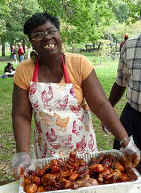
annual Labor Day picnic in Margate park,
is celebrated September 5, 10am-2pm -
with softball,
great barbeque dinner, maybe even live music! ::
Our
annual Labor Day picnic in Margate park,
is celebrated September 5, 10am-2pm -
with softball,
great barbeque dinner, maybe even live music!
Every
year Peoples Church serves 5-600 dinners on Labor Day to people in the
neighborhood who may not have a home, or don't get enough to eat in the normal
run of things, or don't get to spend holidays with their families.
Take
a look at our letter (pdf), or click on the "Support Us" link to the
left, to donate something towards the cost of this great meal.
::
Check out the Coffeehouse on
Friday, September 9, with Michael Smith!
::
And
September 11, from 2-4pm, the Treasures of Uptown interfaith
group holds a commemoration for the tenth anniversary of that horrific attack,
with a focus on peace, and how the world's religions perceive the Golden
Rule. For the latest, see the website, TreasuresofUptown.org.
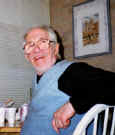
This Saturday, July 30, celebrate the life of John A.
Polachek with his family and friends...
Special
benefit performance... April 16
Jazz harpist Brandee Younger, fresh from New York City, and
friends, perform Saturday, April 16 at a special event - 6pm is a reception
with local artists' work and refreshments and a chance to talk with the
performers... 7pm is the musical performance.
See more here: Benefit
performance
This event benefits this grand project (Peoples Church home), the Preston
Bradley Center, where we care for this beautiful historic place, we house and
feed the homeless, and we open our doors for Uptown community events.
Feb
7 - Treasures
of Uptown interfaith discussion
This
Sunday, the Treasures of Uptown interfaith group is proud to present Rev.
Taigen Dan Leighton at the Buddhist Temple of Chicago, 1151
W. Leland Avenue, 2pm. He will introduce Buddhist ideas of life and death, and
invite reflection on its meaning in our other traditions.
All
are welcome! Please see the flier.
January
27: Help End the Death Penalty in Illinois
The
Illinois legislature passed the bill ending the death penalty in Illinois, and
Governor Quinn is waiting to hear from us about whether he should sign it into
law. The letter below owes some of its text to a letter written by 65
retired judges and prosecutors, both state and federal, urging Governor Quinn
to sign. (The complete text of their letter and names are attached as a
PDF.)
Please
feel free to cut and paste - and edit! - your own letter to the Governor, and
help bring this outdated practice to an end.
If
you'd rather call, the governor's phone numbers are:
Springfield
Phone: 217-782-0244
Chicago
Phone: 312-814-2121
---------------------
Hon.
Pat Quinn
Governor
of
Illinois
207
State House
Springfield
,
Illinois
62706
January
27, 2011
Dear
Governor Quinn:
As
a citizen of
Illinois
and a friend/member of the Peoples Church of Chicago, I urge you to sign the
death penalty abolition bill passed by the General Assembly.
There
are several reasons that the death penalty should be abolished.
First,
no one should take it on themselves to decree the death of another – this is
a moral issue in keeping with our faith’s reverence for the gift of life.
It is especially damaging for the state itself to adopt this strategy,
as it negatively impacts everyone who is involved in the process, by
desensitizing them to killing, and separating them as human beings from those
who have been convicted of a capital crime.
And if the state should be acting corruptly, on behalf on certain
groups or people, the death penalty becomes one more tool for tyranny. It
has certainly been the case that a disproportionate number of people of color
end up on death row.
As
an urban church in a neighborhood that suffers its share of gang activity and
violent crime, we are deeply concerned, as we know you are, about public
safety. But there simply is no credible evidence that the death penalty deters
crime. It has also been argued
that we need the death penalty as a means of obtaining guilty pleas in
exchange for life sentences, but using the death penalty as an instrument of
coercion has led to false pleas and erroneous convictions. Limiting
the death penalty to particularly heinous crimes – another argument for
preserving it – would not solve the underlying flaws that inevitably occur
when the authorities are under pressure to win convictions in high-profile
cases.
Also,
particularly given our state's severe budget problems, it is apparent that we
are spending scarce public funds on a punishment that is flawed and rarely
imposed. We are living in a time
of fiscal crisis. The vast sums
that would be spent on the death penalty in the years ahead are sorely needed
for other, more effective law enforcement purposes.
After
a full and fair debate, our elected representatives have sensibly voted to end
the death penalty. I urge you to
sign the bill.
Sincerely,
Name:
(print)
Address:
Tues,
Jan 18, 2011: May God please bless this New Year!
I've
seen a number of references lately to Bob Dylan's song, "Subterranean
Homesick Blues" - somehow it seems to echo the uneasy feelings many of us
are feeling, as this new year gets underway.
Look
out, kid,
It’s
somethin’ you did
God
knows when
But
you’re doin’ it again
What
did we "did"? What have we done for all this anger to be
coming down the pike these days? How can we muster enough love to
counteract this kind of hatred?
We
were horrified by the shooting of U.S. Rep. Gabrielle Giffords and 18 other
people in Tucson (six fatally) by a seemingly deranged man. Because she
was one of 20 Democrats that Sarah Palin's website marked with gun sights for
electoral defeat, people have made the case that such imagery leads people
like Jared Lee Loughner to take it as a literal suggestion for action, rather
than a metaphor.
It's
true that all too many people see metaphors literally - but first, it seems
that Loughner was probably not influenced by Palin's website, and secondly,
I'm pained at the idea that our freedoms be narrowed to protect us.
Can't we look back at how we as a society failed him, and others like him, by
failing to intervene when earlier incidents must have raised red flags?
"There's
no money in the budget for such things..." "The people are
overworked..." "He didn't do anything criminal..." There
are all kinds of - very legitimate - excuses why nothing happened.
I
hope that we can begin to take better care of one another, somehow. I
think it needs to start in schools, when people are young and good things can
have more of an impact; but it has to start from an attitude of caring,
not of punishment and suspicion.
A
Bit of Hope
Several
things give me hope - yesterday at our Martin Luther King, Jr. Day
There's
an organization doing great work.
And
our Illinois legislature, in its final hours (from last term) delivered on
some powerful legislation that brings tears to my eyes - it voted to abolish
the death penalty in Illinois - an outcome I could hardly believe possible -
and it voted to increase the state income tax. No one likes taxes, but
our state needed to do this, or we might as well have hung up our hats and
gone home. I like to think of taxes as an investment in our
future. If you don't invest, you ain't gonna get any return!
So,
keep looking for signs of hope, for acts of courage, for kindness of
strangers... Happy New Year!
peace,
Jean
p.s.
And check out my recent sermon from Kwanzaa (Dec 26) that Kristin has put up
on YouTube: http://www.youtube.com/watch?v=rDJXFuT1ILk
December
17, 2010: Merry Christmas!
One
of my favorite carols of the Advent season is “People, Look East” – it
expresses some of the hope and anticipation of Christmas time.
“Love, the Guest, is on the way…”
Advent,
in the Christian calendar, is a time of waiting, a pregnant pause, so to
speak, waiting for Jesus the Christ-child to be born;
but also preparing (“trim the hearth and set the table…”) for the
miraculous, for the holy, to come again into our lives.
In
many of the fairy tales I read and loved as a child, the stranger who came to
your door was not who he or she appeared to be – a ragged beggar might be a
prince; a wizened crone might be a
beautiful fairy queen. The lesson
often was that you should always be kind and generous, because you never knew
who was really knocking.
Giancarlo
Menotti’s beautiful Christmas opera, “Amahl and the Night Visitors,”
begins with just such a scene: Amahl,
a poor and crippled boy, answers the insistent knock at the door at his
mother’s urging, only to find a king standing there.
His mother doesn’t believe him and gets angry, finally going to the
door herself to find the three Magi hoping for shelter for the night.
The
unexpected knocks. A blessing in
disguise! How differently would we
act toward others if we saw in every chance encounter the face of God?
Amahl’s
mother is us – she is everyman – she is beleaguered by her poverty, her
fears for her son; she loves him
but expects nothing but trouble from him – he lies, he’s always late,
he’s irresponsible; she is
filled with envy and wants the royal travelers’ gold for herself.
In all her weakness she is oh, so human.
We see ourselves in her.
This
season invites us into our better selves:
where we feel envy, to practice generosity;
where we blame, to practice forgiveness;
where we worry about our future, to practice trust.
To not only wait, in this season of expectation, but to practice for a
future we want to walk into; by
living it now.
May
you be blessed with all the closeness of family, all the growth of spirit, all
the joy and happiness, that this season can bring.
Merry
Christmas! Merry Christmas!
Merry Christmas!
Peace,
Rev. Jean
Monday,
Dec 6: Not quite marriage equality, but closer...
On
this, the eve of Human
Rights Day (Dec 10), we can cheer that the Illinois legislature passed the
civil union bill December 1st - finally some of the rights available
automatically to married couples will be available to gay and lesbian couples,
including being able to visit one another in the hospital, make medical
decisions about their partners, and have legal rights as parents.
The
Huffington
Post wrote:
The
Illinois Religious Freedom and Civil Union Act will also protect the rights of
religious institutions to define marriage as they choose, and will be
available to any couple, same-sex or opposite-sex, in a committed relationship
who are: 18 years of age or older, not in an existing marriage or civil union,
and are not related. It would take effect July 2011.
We
applaud this advance of liberty for people who only a generation ago had to
hide, to love secretly, and to suffer all kinds of discrimination and abuse
which was ignored or even perpetrated by authorities charged with serving and
protecting us. We as a society have come a long way since Stonewall, the
emblematic event in New York City that marked the beginning of the Gay
Liberation movement.
And
it looks like the "Don't ask, Don't tell" policy will bite the dust
soon - some 70% of service men and women say they don't care if a fellow
soldier is gay.
It's
a good day to celebrate!
peace,
Jean
Thursday,
Nov 25, Thanksgiving Day
Dear
Friends -
I hope you have a wonderful, nurturing Thanksgiving holiday, surrounded by
people you love and doing work that is satisfying.
At Peoples Church last Sunday, after the wonderful potluck Thanksgiving dinner
we shared, it came home to me how these dinners we share are a form of prayer.
The fellowship, the food, the effort and care people have put into the dish
they've brought, but especially the feeling we get from sharing our lives...
I look around the table, and see many conversations going on, hear voices
raised in animation and interest, see smiles and looks of concern for others
pass over people's faces. It's a sacred time, a precious time.
May we have many more.
And may you enjoy such laughing, talking, eating, and contented time on this
Thanksgiving Day!
peace,
Rev. Jean
Oct
25:
We
raised over $600 for singer-songwriter Anne Feeney at our benefit October
23. Thanks to all who attended, and contributed your presence, your
voice, your enthusiasm, your caring spirit! Especially, thanks to
Kristin Lems, who organized the event, and to the great musicians who made it
a wonderful musical experience:
The Awesome Folk Band,
Andrew
Calhoun, Brian Cutean, Amy Dixon-Kolar, Niki Leeman, Kristin Lems, and Bitter
Melon: Al Day, Charlie Madigan, and Randy Lee!!
September
8: Here's
text for a plaque we'll be ordering and placing on the front of the building
soon - it only took ten years for us to find out about it!
The
Peoples Church of Chicago
As
part of the
Uptown
Square Historic District
has
been placed on
the
National Register
of
Historic Places
United
States Department
of
the Interior
2000
Monday,
July 12: In Memoriam...
We
are sad to note the passing of Lula Bradley, 95, a long-time member of
Peoples Church. Services are Friday, July 16: Visitation at
9am, funeral at 10am.
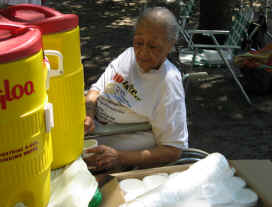
Lula
admired Preston Bradley from the South side of Chicago, and moved to the North
side in part because she felt a calling to help the church. She was a
nurse at Weiss Hospital - and retired long since, of course. She had been
living at The Waterford nursing home in Rogers Park. She is survived by
grandsons David and Clarence and their siblings and children.
Lula
at 93, pouring lemonade for the Labor Day picnic.
Monday,
June 14: Hunger Walk coming up June 26
The 2
Li'l Fishes lunch program multi-talented cook and
volunteer-coordinator Will Pruitt writes:
Hidden
within the diversity of Uptown is a segment of the population too frequently
misunderstood, ignored, and sometimes vilified: the At-Risk. Over 25% of
the population lives at or below the poverty level. What unites almost all of the At-Risk is malnourishment.
Poor diet can amplify problems to a life-threatening level.
The 2 Li'l
Fishes lunch program fights hunger among our neighbors in need – we serve
about 2000 meals a month, four days a week, year-round; half the people are homeless,
the others are simply people whose food budgets don’t stretch far enough.
You can help by taking part in the Greater Chicago Food Depository’s 25th Annual
Hunger Walk this June, raising money for food for this important program.
It takes place Sat, June 26, 8am at Soldier Field – register on-line at http://www.chicagosfoodbank.org/,
to help the 2 Li'l Fishes program. Look for “Preston Bradley Center,” our 501(c)(3) agency.
Tuesday,
June 8: Middle East trauma
The
small flotilla of boats from Turkey, the grandstanding and threats tossed
around, the boarding of the lead boat by Israeli commandos and subsequent
killing of nine of the activists... It makes me sick to heart. The
activists included a number of famous people, including Nobel peace laureate
Mairead Corrigan-Maguire (who founded the Peace People in Northern Ireland
during the troubles) and writer Henning
Mankell, author of the best-selling Wallander series of crime novels.
My
impression is that some of the activists - desperate to change the situation
for Palestinians - were committed to nonviolence, while some others had a
different agenda entirely - to get the Turkish government to break its ties
with Israel. They were not committed to nonviolent action. This
second agenda worked.
I
think it was naive of people to think they would be able to break the blockade
of Gaza with this action. Martin Luther King and the Civil Rights
movement were committed to non-violence - they endured incredible abuse, and
even death. But the strategy had to include press coverage - to capture
a violent response to nonviolent protest. On March 7, 1965, after being
denied a permit to march from Selma to Montgomery Alabama, some 500 civil
rights marchers went anyway. When they crossed the Edmund Pettis bridge,
they were "tear-gassed, trampled, and beaten by state police ...in a
horrifying spectacle captured by network television cameras," as Thomas
Jackson writes in From Civil Rights to Human Rights.
It
is much harder to get press coverage these days - the press is
"embedded" in the military, and independent press become
targets; the press is blocked from coverage of events; too much of
the press is no longer really independent, but depends on approval of the
powers-that-be to continue to have access to official information.
But
I still believe that the answer lies in nonviolent action, and especially in
those actions that are slow, that don't make good photo ops or sound bites -
the schools that include both Jewish and Muslim children, the conversations
created among Israelis and Arabs - all the cross-cultural work that helps
create understanding and sympathy.
On
hearing that many Israelis were canceling their vacations to Turkey, one
Turkish citizen said, "We can't blame Israelis - this is not the
people, it's the government that is doing these things."
We
can only pray that more people have such understanding, and work to get our
governments to act in ways that lessen tensions, rather than increasing them.
peace,
Jean
Monday,
May 17, 2010: Gulf
Stream Waters
Like everyone else, people in our congregation have been horrified at the
gushing of oil into the Gulf, with no end in sight yet, and with fingers of
blame pointing every which way. I've heard rumors that the well was
being used for production (even though it wasn't officially ready), because it
is cheaper to produce the oil that way. We'd like those responsible to
own it, to pay to clean it up, and take their responsibility seriously, in the
future. We'd like our government to better regulate, so this doesn't
happen again!
We
are praying that the devastation of this kind of event can lead to saner
energy policies (though I also heard a conservative in Congress say that this
spill will mean it will be harder to pass a climate change bill
- that logic escapes me...).
The
good news is that Grace's school and other Chicago public schools are raising
money to buy solar panels for the schools, and that grade-school children are
being educated about the benefits of solar and other alternative sources of
energy. Good for them!
Grace
(our President and 3rd grade teacher) says she'll still accept donations for
her school, if you'd like to help. You can even donate via Peoples
Church, on-line, if you mention in the comment line you want it to go for
Grace's school. (see "Support Us" to the left)
Our
interconnected web feels more and more interconnected - we need to do our
part, as co-creators with God, if we want to keep this beautiful planet Earth
alive for future generations of people, and shrimps, too!
peace,
Jean
“Spring Has Sprung”
(from
the April newsletter)
We had a
taste of spring a week ago – the air soft, the sun warming our faces, new
bird song just audible through the storm windows, the grass starting to green
up. The fact that it snowed on the
Spring Equinox – the first day of spring – doesn’t discourage us.
We know winter is down for the count.
The
Easter season is a time for thinking of new life, of fresh starts, of the
resurrection of old projects lying around in our basements…or in our attics:
Peoples Church has lots of rooms upstairs where things are tucked away,
and we’ve started investigating...
more
Thursday, April 1:
'Twas
the night before Good Friday, and all through the house... We're gearing up
for a busy - and powerful - weekend, and hope you'll join us for one of these events.
The
letters to your Illinois state reps (at left, sidebar) are still in
order! Illinois has sunk to 49th in state funding of education.
That's pretty shameful. Ask for an income tax increase - it's the fair way to
raise money for all the needed services that have been slashed... Among
them Ceasefire, the excellent violence-de-escalating program that teaches
teens to back off from violent response to perceived insults.
My
husband Ken and I just got back from celebrating Passover with his mom out
east - it was a warm and meaningful celebration of liberation, on many
levels. If you've never been to a seder, try to go to one next year - we
hope to celebrate the Shalom Center's Freedom Seder here next year -
you can take a look at it, and lots of good words of wisdom, at their website,
http://www.theshalomcenter.org/.
I've
been negligent about writing here. Sorry. Gee, Mom, I promise to
write more often!
peace, Jean
Thursday, November 25th: Happy
Thanksgiving!
Yesterday
Peoples Church hosted a wonderful Thanksgiving meal – thanks to a South side
church group that comes every year, bringing turkey, dressing, and all the
trimmings. We welcomed several hundred people, a few just wanting to
share that special meal with others, but most of them homeless.
There
is a poem of Rumi’s, a 13th century mystic, that always reminds
me that we don’t really know the big picture. In “The Guest
House,” Rumi is talking about our inner selves, about welcoming one’s own
emotions – whatever they are – as if they were old friends or relatives,
as if it were Thanksgiving. It’s important work, in knowing ourselves
and learning equanimity.
It
ends like this,
The
dark thought, the shame, the malice,
meet them at the door laughing,
and invite them in.
Be
grateful for whoever comes,
because each has been sent
as a guide from beyond.
[1]
I think Rumi's words are relevant not just to our inner selves – they apply
equally to the people we encounter every day in our lives.
Peoples
Church
welcomed strangers in for a special meal yesterday. All the rest of the
year, four times a week, we serve a good, hot lunch to about 130 people a day.
If you have met Isaac, our lunch program coordinator, you know the heart and
soul he pours into the program, and he makes sure that our guests get not only
good food – like baked chicken, potatoes, green beans – but that they are
treated with dignity, as human beings. Isaac encourages volunteers to
just spend time with the guests, playing games or just talking with them.
We
welcome the stranger.
We are
grateful for your support, so that we can go on welcoming the stranger, and
seeing in that stranger’s face the face of an angel, the face of God, the
face of our neighbor.
peace,
Jean
Monday, June 22, 2009: "The rich will always be with us..."
Wait a minute... Wasn't that "The poor
will always be with us"?
My dad used to wax wroth over the large sums
that athletes earned, and once when he complained about how many dollars an
hour his plumber charged, I asked him, "How much an hour do you
yourself make?" He wouldn't go there.
So when a clergy friend recently said,
"Some people make too much money!" another responded that that
would always be true, and we jokingly rephrased Jesus' words.
But why can't we dream of a time when no one
is poor? It's within our capacity, as thinking and compassionate
beings. The Scandinavian countries have dealt with poverty by transfer
payments - by paying poor people, so they aren't as poor. Poverty is
one social problem that is fixed by throwing money at it.
For example, Sweden pays for young people to
go to college, and gives them credit for life experience, to encourage
people who dropped out to go back and finish their education. It
benefits society as a whole for as many people as possible to be productive
citizens, to achieve a measure of success and happiness in a job. We
are even healthier (all of us!) when the gap between rich and poor is
smaller.
Way back in the early days of the church,
people pooled their money, their possessions, and shared, so that those who
had a lot to give did, and those who needed more, received. It was all
about community.
These days, we don't know one another so
well... We have seen too many e-letters from Ethiopian princes urging us to
invest, so that they can release these billions of US dollars direct to our
bank account. We don't trust the next guy. How can we be sure
our gifts will not be squandered? How can we ask for help without
arousing suspicion and feeling put down?
I'd love to see the day when we don't have to
beg for help, when help is assumed, and people are not left anxiously
waiting to see whether they will have a place to sleep or food to eat.
Right now, though, I'm very worried about the
safety net we do have, and how rapidly it seems to be unraveling.
Please contact your Illinois legislators and urge them to pass an income
tax increase - to cover the budget shortfall and keep the proposed
drastic cuts to social services from taking place.
Our elderly friends who rely on housing
support, who need aides to visit during the week to help them with the most
basic of tasks; our friends with mental illness whose income may be
slashed, who may end up on the streets... For these people we pray
that we act to encourage our legislators to take that unpopular act, and
have the courage to raise taxes.
Here are sample letters (you'll have to fill
in the blanks): to your Illinois state representative; to your
Illinois senator. Better yet, telephone them, while they are in
Springfield working on the budget this week.
peace,
Rev. Jean
March
30, 2009: Jesus
walked the walk...
We
are a Christian Unitarian-Universalist church - we see the teachings of Jesus
as revolutionary, as life-changing, as counter-cultural - Jesus would not
have said after 9/11, "Go, therefore, and make war on your
enemies! And go ye also and spend money in the marketplace!"
He
might have said, "Mourn those who have died; pray for those whose
anger consumes them; stand up to those who make war; preach peace and reconciliation."
Some
call this a "post-Christian" era, when the church has become
obsolete, irrelevant; some say Christianity will teach all the world's
religions to live in love and action for the poor.
I
believe it's an era when all religions are learning from one another, when
people from all over the world are teaching each other lessons forgotten in
the mists of time. We are remembering to be human, to be humane;
we are remembering that life is more than striving to get ahead, or
struggling to put food on the table.
God
is still speaking, and speaks in tattooed and pierced outsiders, in children's
laughter, in crowds of people in a church demanding justice for immigrants, in
waves crashing high into the air against the concrete lake shore, in homeless
people lined up for a warm meal, in yellow crocuses poking their intrepid
heads above the snow.
Courage!
After the struggle, joy!
peace,
Rev. Jean
March 2, 2009: A cure for resentment...
One of the very useful metaphors in the Bible is the notion of
the desert - and how sometimes one has to wander there, in this place of
emptiness, lacking creature comforts, lacking human society - a place where
you are face to face only with yourself and with God.
The forty years that Moses and his people wandered there, on
their way to the promised land... the forty days and nights Jesus fasted in
the desert, when he was tempted by the Devil... the forty days and
nights of rain that flooded the earth and rocked Noah's ark...
Forty represents a long time, long enough to die there - but
short enough to anticipate the end of.
The Christian season of Lent - also forty days - is
traditionally a time of sacrifice and reflection. With so many of us facing economic difficulties these days, it is easy to let "compassion
fatigue" get the best of us, and close our hearts to the growing need
around us.
Some of the resentment we may feel actually comes from our
sense of helplessness in the face of so much pain - why is anyone looking to us
to fix this, to help?
One sure-fire cure is to give anyway - to make some
contribution, to help just a little. It relieves us of that nagging
sense that we "should" be doing something, and more importantly, it
puts us in touch with our underlying feelings.
If we want to be the kind of person who acts from the heart,
then we need to practice. Buddhist teacher Thich Nhat Hanh tells us that
when we feel stingiest, that's when we need to be the most generous in giving
money away.
peace! Rev. Jean
Feb 9, 2009: Black History Month and nonviolence...
At Peoples Church we celebrate the Season for
Nonviolence, that runs from January 30 to April 4th, the dates of the
assassinations of Mahatma Gandhi and Martin Luther King, Jr. We try to
keep in mind ways we can add to the peace of the world, in our personal lives
and in our culture and in the world, from caring for the Earth by recycling to
minding our tongues when we are upset about something. Sunday's
admonition was: "Today, I will oppose injustice, not
people." Our goal is not to place blame, but to
encourage change - we're pragmatists, in our idealism!
But being peaceful can also mean rocking the boat when
injustice reigns.
On Sunday we feted Dr. Joseph Lowery, who gave the benediction at
President Obama's Inauguration, as a leading figure in Black History, and one
who was and is a leader in the movement for nonviolent response to injustice.
His prayer, in part:
Help us then, now,
Lord, to work for that day when nation shall not lift up sword against nation,
when tanks will be beaten into tractors, when every man and every woman shall
sit under his or her own vine and fig tree, and none shall be afraid; when
justice will roll down like waters and righteousness as a mighty stream.
I love that image of tanks beaten into tractors! May
we be so blessed! And may we likewise find ways of turning our own
private bullying into nurturing.
peace, Rev. Jean
January 19, 2009: A Time for Celebrating...
We're preparing for the Inauguration celebration tomorrow, a
huge step forward on the path to Martin Luther King's dream, and to fulfilling
America's founding vision of justice and equality for all. Our office is
closed today in King's honor, and tomorrow we'll hook up the office computer
to the internet to watch the Inauguration.
Yesterday at Sunday service we sang freedom songs and
remembered the power of King's words and his courage in speaking out.
and for preparing...
We talked about what may be the next step on the path to
civil rights, to human rights: doing something to lower the
incarceration rate in this country, which rivals that of China and of the most
totalitarian states around the world.
We listened to speaker Ra Chaka, who runs the Justice
Center for Victims of Wrongful Convictions and Police Misconduct, a center
“dedicated to restoring balance to the system by representing those who have
been affected by abuse at the hands of law enforcement.” No one wants
to go to prison. But one out of four young African American men have
been affected by the criminal justice system - in prison, on probation, or
waiting trial - and over half of all prisoners are black, when they make up
only 12% of the population. And Latinos come next.
Chaka told us that the system no longer trains people to
re-enter civil society, as it once did - in fact, Illinois law now prohibits
ex-felons from obtaining licenses for beautician, barber, and other services
that prisoners used to get training in. In some states, felons lose the
rights of citizenship, even after they are released.
Prisons have become big business, and in some states they
are privatized and run by for-profit companies. Communities in downstate
Illinois beef up their depressed economies by building prisons that will
employ local people - which puts most prisoners far from their families, and
further divides upstate and downstate in Illinois.
It's time to begin educating ourselves about this issue and
the social ills that go with it. In this, a new era of unity and
pragmatism, it's time to look for more effective ways to deal with
crime. We need a better balance - not a tug of war between being
"tough" or "soft" on crime, but a way to better address
the needs both of victims and perpetrators. I invite you to take a look
into "restorative justice" - a perspective that takes into account
the concerns of both liberals and conservatives.
peace, Rev. Jean
November, 2008 Reprieve for REST emergency shelter
We are grateful that Ebenezer Lutheran Church voted on
Sunday to open their doors to the homeless men left stranded by the closing of
the emergency shelter at Epworth Church, which had hosted the shelter for over
20 years. This is a temporary situation, and not ideal, since Ebenezer
has no showers. The city funding of the shelter was cut, and Ebenezer
Church - and REST itself - need financial support to house and run the
program. We'll keep you informed as the situation develops. But
this step is a big relief!
Peoples Church is home to REST, the largest homeless
services provider on the North side, which has been operating the emergency
shelter at Epworth, as well as a women's shelter at another church nearby, and
a men's shelter in our own Anderson Hall, downstairs. As the weather
gets nastier, please consider supporting those organizations that are
providing homeless people with the essentials of life, and helping them get
back on their feet.
October 5th, 2008: another Uptown
shelter closing...
We just found out that one of REST's two men's shelters is
being closed by the church that has housed it for over a decade. The
Sun-Times calls it a dispute over heating costs. We don't really know
the reason, but it is another blow to the homeless people who live on the
North side. We've heard that the city wants homeless people in our
neighborhood to move to shelters on the West side or downtown. But
people - even if they have no address - feel a connection to their
neighborhood. You wouldn't normally ask a Southsider to move to the
West side - can you expect people who are currently homeless to feel any
different?
I wonder if this decision comes in part out of the tension
between old and new residents in Uptown? We are planning to hold a
gathering to consider how to build more community feeling and maintain the
diverse character of the neighborhood.
What makes you feel connected to your community?
Send me your thoughts - I'll post some of them here. minister@PeoplesChurchChicago.org
peace, Jean
September 30, 2008
Last Sunday we watched part of a June speech by Van Jones,
the dynamite and oh, so "articulate" young man from Oakland who is
bridging the divide between environmental and racial justice. A Yale law
school graduate, he mentioned testifying before Congress to help get the Green
Jobs Act passed in 2007, and having members of Congress come up to him and
tell him how "articulate" he was - and yet, wasn't this an awfully
expensive program? Each person from the 'hood would cost $15,000 to
train, where if they trained "job ready" people it would only cost
$3000. How could he justify this "waste" of money? Van
had to bite his tongue.
Van Jones is working for a society with no
"waste," like the factory that has zero pollutants: a society
that doesn't leave anyone out, where all people are considered valuable
potential participants. "If you don't invest in these
youngsters," he said, "If you don't spend this $15,000 and give them
some hope and some skills, then you're going to be spending $50, $60, $70
thousand locking them up, forever!"
After the service, we had lunch - a great potluck - and
talked about what Van had said, and our responses to it. People
mentioned hope, and the power of not leaving anyone out, and how moving it was
to hear him talk about the indigenous peoples of the world, and how much we
need their wisdom about caring for the Earth.
It was moving for me to be part of this sacred
conversation. We are just learning how to be with one another around
difficult subjects, and to be honest and respectful and true to
ourselves. It is sacred because it touches our hearts so deeply, because
to talk about things that have been hidden away is to shine a healing light on
them.
In the gospel of Thomas Jesus says, "If you bring forth
what is within you, what you have will save you. If you do not have that
within you, what you do not have within you [will] kill you." G.Th. 70
(Patterson and Meyer trans.)
I like to think this saying means that we shouldn't keep
things bottled up inside - it's poison!
If you want to watch the whole speech by Van Jones, it's on
the UUA website: http://www.uua.org/events/generalassembly/2008/112314.shtml
Don't miss the next Sacred Conversation, October 26th, when
Keith Scott, organizer and former zoo educator, talks about the intersection
between the criminal justice system and race.
peace, Jean
September 19, 2008
I read an amazing little essay by Deepak Chopra, talking
about our national psyche and how it is being played out in the Presidential
election... dovetails with what I was talking about last week, about the
wicked witch and how she expresses our darkest desires for revenge, even
while we can disclaim her.
This Sunday, we'll celebrate the Fall Equinox - the moment
of equal light and dark, the change from summer to fall, the anticipation of
winter. And how light and dark play out in our lives.
peace, Jean
September
11, 2008
Seven
years after the horrific events of September 11, 2001, we seem to be caught in
a time-warp, as the Bush administration wages a "war against
terrorism" that they are now calling "generational" - that is,
they expect it to drag on for at least a generation. I wish the
mainstream media were more willing to question the assumptions Washington is
operating under - if alternatives to war were presented seriously, people
would have something to think about, be able to make an informed choice.
I
heard a powerful interview on NPR (Terry Gross) with Andrew Bacevich, military
man turned history professor, author of a number of books, most recently, The
Limits of Power: The End of American Exceptionalism, in which he stresses the destructiveness of belligerence
as foreign policy and the value of openness - not secrecy - in how our
government ought to operate. I hope everyone gets a chance to hear
Bacevich when he comes to Chicago on his book tour, October 12-14.
We
are still digesting the events of 9/11 - we can find some meaning in that
senseless destruction, through hearing the stories of survivors - how we as
human beings dealt with the unthinkable. Would we also have been the
ones in the cafeteria saying, "But what about my eggs?" as the
manager tried to get her employees to shut down the cooking line and evacuate
the building? No knowing, of course - but how human!
Many
of us yearn for the feeling of safety we used to feel before that day in
September seven years ago. I hope we can realize collectively that
security is a false wish - living in a bunker is not what I would call
living. We are safer - more resilient as a people - if we can come
together to live life fully in a community that offers the most in freedom and
shared responsibility, to make sense of whatever happens - to share the
stories.
peace,
Jean
for other musings, see the Newsletter
|
The Peoples Church of Chicago
